Everything You Need to Know About the Features of a Type 5 House and Its Advantages
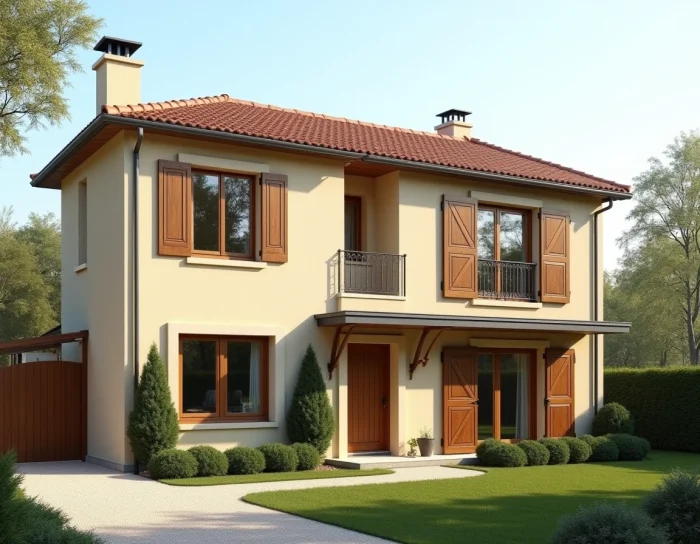
A type 5 house, or T5, refers to a dwelling that includes four bedrooms and a main living area. This classification, standardized in French real estate, says nothing about the actual size or layout. Two T5s can offer radically different experiences depending on the distribution of rooms, insulation, or the shape of the building. Understanding what distinguishes a high-performing T5 from a T5 on paper requires going beyond a simple reading of the number of rooms.
Sound insulation in a type 5 house: the weak point of recent renovations
Renovated type 5 houses from the 2000s concentrate a recurring problem: the sound insulation between main rooms remains insufficient. UFC-Que Choisir, in its April 2026 study on the quality of family housing, notes a significant increase in post-purchase complaints on this specific issue. The thin partitions installed during quick renovations explain most of the phenomenon.
For a family with four occupied bedrooms, this acoustic weakness transforms daily life. Noise travels between rooms, reducing sleep quality and complicating remote work from a bedroom converted into an office. The characteristics of a type 5 house include this often-overlooked dimension during the visit.
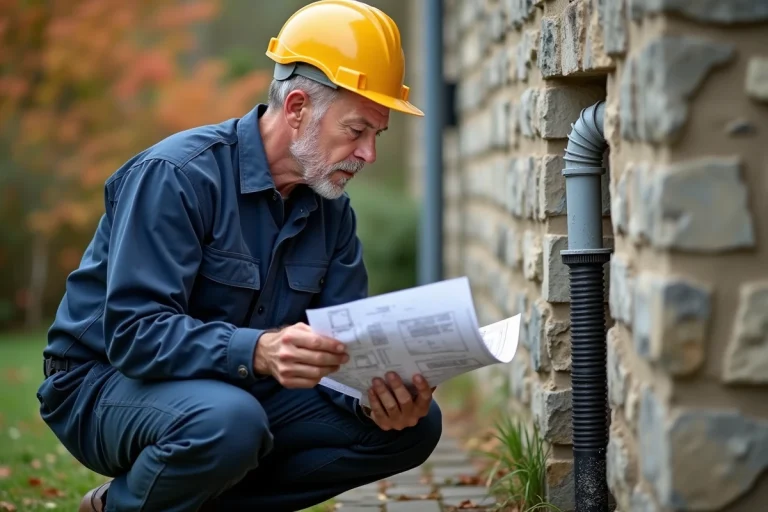
Before a purchase, checking the thickness and nature of the partitions between bedrooms can help anticipate corrective work. A simple plasterboard partition (without mineral wool in between) transmits most impact noise and conversations. An acoustic diagnosis is not mandatory during a sale, leaving the buyer without reliable information if they do not ask the question.
Type 5 house: comparison of common configurations
Not all type 5 houses are created equal. The shape of the building, the number of levels, and the orientation profoundly change daily use. The table below summarizes the most common configurations on the market.
| Configuration | Main advantages | Limitations |
|---|---|---|
| Rectangular single-storey T5 | Accessibility, smooth circulation | Large footprint, reduced privacy between bedrooms |
| Two-storey T5 (R+1) | Clear separation of day/night, smaller possible plot | Restrictive stairs, noise between levels |
| V-shaped T5 (single-storey) | Increased brightness, natural separation of spaces | Higher construction cost, complex roofing |
| L-shaped T5 | Good separation of zones, adaptation to the terrain | Sometimes long distribution corridor |
V-shaped T5 houses have gained popularity in recent years. Their shape allows for triple exposure and generates more natural light than traditional rectangular configurations. This light gain is estimated at about 20% more natural light compared to a straight plan, according to available bioclimatic design data.
On the other hand, the two-storey T5 remains the most common configuration in urban and suburban areas, where plot sizes necessitate building upwards. The choice depends as much on the land as on the lifestyle.
Type 5 house and blended families: an underestimated use case
The T5 is often associated with the classic model of two parents with two or three children. However, blended families with children of varying ages, present on alternating custody, represent a common use case that alters layout needs.
In this configuration, the four bedrooms of a T5 do not always guarantee everyone’s privacy. A 16-year-old and a 6-year-old rarely share the same schedule, noise level, or space needs. The distribution of bedrooms matters as much as their number.
- Two adjacent bedrooms are suitable for young children, but a teenager needs a room away from the living area to isolate themselves
- A single bathroom for four bedrooms creates a bottleneck during peak hours, especially in alternating custody when the household shifts from two to five occupants
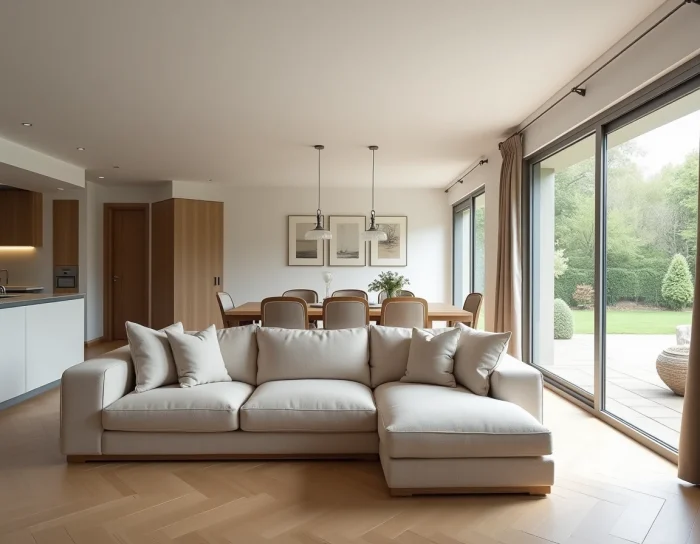
- A multifunctional space (office, playroom) compensates for the absence of a fifth bedroom, provided the living room is large enough not to serve as a buffer room
V-shaped or L-shaped T5s offer a structural advantage for this type of family: the physical separation between the two wings of the building allows for age group distribution without artificially partitioning. A V-shaped plan naturally isolates the parental area from the children’s area, which a corridor serving four aligned bedrooms does not allow.

Energy performance and heating of a 5-room house
With four bedrooms, a living room, and often an open kitchen, the living area of a T5 implies a significant volume to heat. The energy class of the dwelling directly determines the operating budget.
A T5 rated F or G can cost two to three times more in heating than a T5 rated B. Since the gradual restrictions on renting thermal sieves, energy performance also impacts resale value.
Key areas to monitor when purchasing:
- The type of heating installed (gas boiler, heat pump, electric radiators) and its suitability for the volume of the dwelling
- The insulation of the attic and exterior walls, which represents the primary lever for reducing losses
- Ventilation, often undersized in renovated T5s, which generates humidity and degrades indoor air quality
The trend observed in Nouvelle-Aquitaine and Occitanie shows a notable increase in new type 5 constructions. Remote work and the search for space post-pandemic fuel this demand, particularly in rural areas where land remains accessible.
The choice of a type 5 house is not just about checking the “four bedrooms” box on a real estate portal. The shape of the building, the quality of the partitions, the heating system, and the distribution of rooms condition the actual use of the dwelling. For a blended family as for a couple working from home, the layout and construction quality weigh more than the number of rooms displayed in the listing.