How to properly dispose of your worn plastic cutting board?
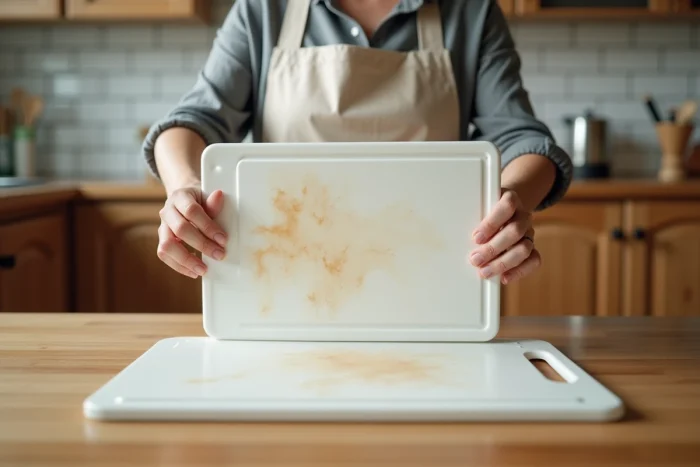
A plastic cutting board always ends up showing signs of wear: deep grooves, persistent discoloration, odors that washing no longer eliminates. The question of replacement arises, but the issue of the proper disposal of the old board often remains without a clear answer. Between recycling bin, waste disposal site, and regular trash, the guidelines vary depending on the size of the item, the type of plastic, and the community.
Recycling or household waste: sorting according to the type of plastic of the board
Not all plastic cutting boards are made from the same resin. High-density polyethylene (HDPE) and polypropylene (PP) are the most common in kitchens. Their recyclability directly depends on the local sorting infrastructure.
The main problem lies in the size and thickness of the item. Municipal sorting centers often refuse large rigid plastic items, even if the resin is technically recyclable. In Quebec, several communities, including Montreal, explicitly request not to place large thick boards in the residential recycling bin.
| Criterion | Recycling bin | Waste disposal site or eco-center | Household waste |
|---|---|---|---|
| Small thin board (soft PP type) | Accepted in some communities | Accepted | Last resort |
| Large thick board (rigid HDPE) | Refused in most cases | Accepted (bulky or rigid plastics category) | Last resort |
| Very damaged, grooved, soiled board | Refused | Accepted if cleaned | Acceptable |
| Board in good condition | Not relevant | Directed towards reuse | Avoid |
If you’re looking to find out where to dispose of your plastic cutting board with Matin Gourmand, the pathways vary depending on your municipality and the actual condition of the board.
Signs of wear that necessitate disposing of a plastic cutting board
Replacing a board is not just about comfort. The grooves carved by knives create micro-grooves where bacteria can settle permanently. A wash with dish soap, even vigorous, is no longer sufficient to dislodge the microorganisms lodged in these striations.
A deeply scratched board becomes a bacterial reservoir, especially after cutting raw meat or fish. Persistent odors, even after disinfection with vinegar or baking soda, confirm that the porous surface retains organic residues.
Three concrete indicators justify replacement:
- Visible grooves to the naked eye, where the nail catches when running a finger over the surface
- A discoloration that neither lemon, hydrogen peroxide, nor the dishwasher can diminish
- Persistent odors of meat, fish, or fermented vegetables after a thorough cleaning
Continuing to use a board in this condition exposes one to cross-contamination between raw and cooked foods. Boards dedicated to cutting meat and fish wear out faster than those reserved for vegetables, because animal proteins accelerate the degradation of micro-grooves.
Waste disposal site, eco-center, and reuse: concrete pathways to dispose of a worn board
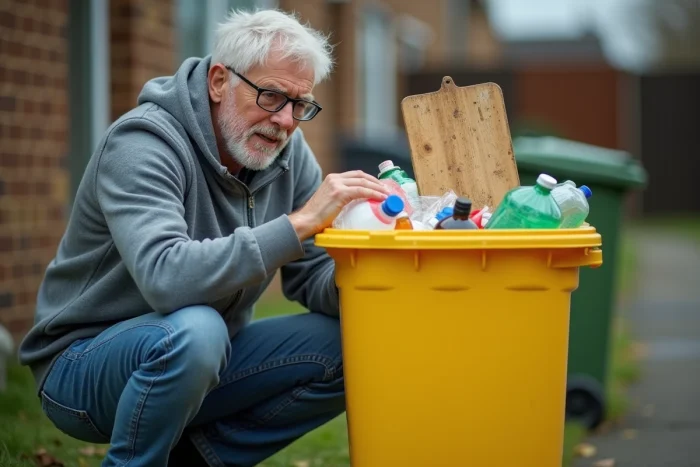
The waste disposal site remains the most reliable pathway for a large plastic cutting board. In France, most waste disposal sites accept rigid plastics in the “mixed waste” or “bulky” bins. Deposit is free for individuals.
In Montreal, eco-centers accept plastic boards in the “bulky” or “construction waste” category, provided they are clean and free of any attached organic food residues. A board still in good condition can be directed to reuse organizations, which avoids landfill disposal.
Preparing the board before disposal
Before bringing a worn board to a waste disposal site or eco-center, minimal cleaning is required. Dried food residues or rancid fats can lead to refusal or classification as non-recyclable waste.
- Wash the board with hot water and dish soap, scrubbing the grooves with a stiff brush
- Let it dry completely before transport to limit odors
- Do not wrap in a closed plastic bag: sorting agents must be able to identify the item
For boards in very poor condition (cracked, warped from heat, blackened), the household waste bin remains an acceptable option. The volume of a cutting board does not justify a trip to a waste disposal site if it is unrecoverable.
Plastic board or wooden board: lifespan and impact on replacement
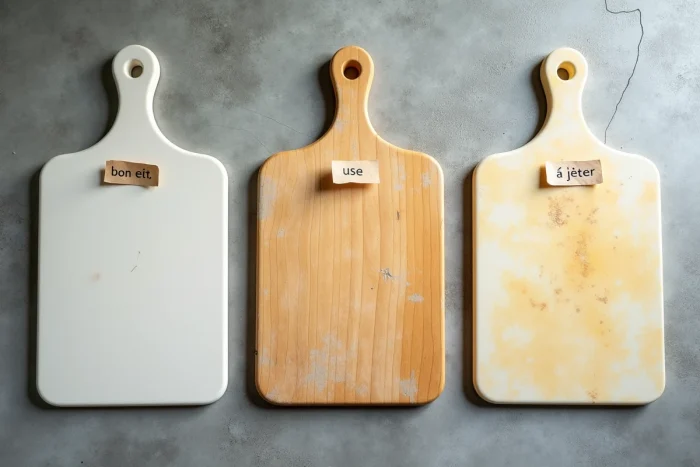
The choice of material determines the frequency of replacement and thus the volume of waste generated. Wood regenerates on the surface through light sanding, which extends its active lifespan. Plastic, once cut, cannot be repaired.
On the other hand, plastic can go in the dishwasher and is more resistant to thermal shocks. This ease of maintenance explains its massive presence in both domestic and professional kitchens.
From a health perspective, both materials present comparable limits once the grooves are deep. The difference comes at the end of life: an untreated wooden board can go into composting or wood energy, while a plastic board depends on a recycling pathway that does not exist everywhere.
Limiting the number of plastic boards in your kitchen mechanically reduces the problem of their disposal. Reserving plastic for uses where hygiene requires intensive washing (cutting raw meat, fish) and using wood for vegetables and bread constitutes a functional compromise that extends the lifespan of each board.
Replacing a plastic cutting board is not just about throwing it in the nearest trash bin. Identifying the right pathway according to the condition and size of the item is the only variable that determines whether the plastic ends up buried or valued.