Why choose Brittany to develop and establish your business?
Brittany attracts an increasing number of creators and leaders each year who are looking for a location outside of the saturated major metropolitan areas. The region combines a completely free road network, four international airports, TGV lines connecting Rennes to Lille, Lyon, or Marseille, and five commercial ports.
This network of infrastructure, combined with economic sectors that are in the process of being structured, raises the question of what Brittany concretely offers to businesses, beyond the discourse on quality of life.
Port land and marine energies: an industrial advantage rarely replicated elsewhere
Regional competitors highlight traditional business zones or peri-urban land. Brittany has an asset that few French territories can claim: port land directly suited to the industrial sectors of the energy transition.
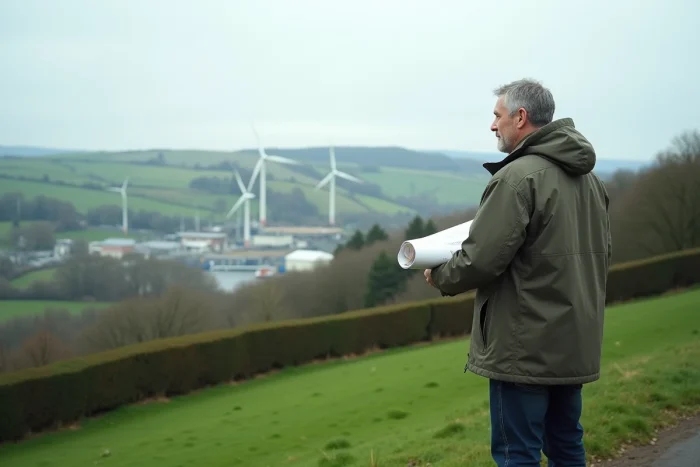
The port of Brest has completed the development of its polder dedicated to renewable marine energies, hosting industrial installations related to offshore wind and tidal energy. This type of heavy infrastructure, ready for use, significantly shortens installation times for an industrial company. Finding a port site of this scale on the Atlantic coast, with deep maritime access and free road service, remains difficult outside of Brittany.
For an SME or an ETI positioned in renewable energies, maritime logistics, or offshore maintenance, the EMR polder in Brest represents a rare anchor point in France. The available data does not yet allow for a complete assessment of the ripple effect on the local subcontractor network, but initial feedback indicates a gradual installation dynamic around the port.

Training and specialized skills in Brittany: what companies find on-site
A location is only as valuable as the workforce it trains. In this regard, Brittany has taken recent initiatives that deserve close examination. Several resources, listed on the Bretagne Region website, detail the training sectors and support systems available for companies seeking skills.
The opening in 2023 of a Campus of Trades and Qualifications dedicated to renewable energies and hydrogen, hosted at the Vauban high school in Brest, illustrates a strategic choice. This campus aims to secure a local pool of specialized technicians in fields where recruitment is tight on a national scale: wind turbine maintenance, hydrogen systems, marine electrotechnics.
The issue goes beyond just the energy sector. Digital and business services are among the sectors where business creation has progressed the most in Brittany since 2021, according to data from INSEE Brittany. This dynamic is partly based on the presence of strong higher education programs in Rennes, Brest, and Lannion, historically focused on telecommunications and digital technology.
Available skills: some concrete benchmarks
- The Campus of Renewable Energies and Hydrogen trains from the vocational high school level, which feeds a flow of operational technicians in the short term for local industrial companies.
- Rennes concentrates a dense digital ecosystem, with training in cybersecurity, artificial intelligence, and software development that attracts startups and R&D centers.
- The Côtes-d’Armor offers economic infrastructures dedicated to creators (incubators, nurseries, venture capital for innovative projects), coupled with support from intercommunalities.
Free road network and installation costs: the Breton economic equation
One logistical detail changes the game for companies whose activities involve regular transport: the Breton road network is completely free. No tolls on the main routes connecting Rennes to Brest, Saint-Brieuc, Lorient, or Vannes. For a logistics, distribution, or agri-food company, this free access structurally reduces operating costs compared to regions where highway journeys weigh on margins.
However, Brittany’s geographically peripheral position relative to the European economic center remains a factor to consider. TGV connections partially compensate for this distance: Rennes is less than four hours from Lille or Lyon. Field feedback varies on this point depending on the sectors of activity. A digital services company working remotely does not perceive this distance the same way as an industrial company exporting to Germany.
Regional aid and support systems
Brittany offers financial aid and support for business creation structured around intercommunalities, chambers of commerce, and departmental development agencies. The Côtes-d’Armor, for example, has venture capital mechanisms dedicated to innovative projects and active local economic networks.
Aid varies significantly depending on the department and type of project. An industrial company seeking land in Finistère will not benefit from the same levers as a digital startup setting up in Rennes Métropole. The level of support depends on the specific territory of establishment, not just the region.
Business creation in Brittany: the sectors driving the dynamic
Since 2021, INSEE Brittany has noted a marked increase in business creations in two particular sectors: business services and activities related to decarbonized mobility. This post-COVID trend reflects a repositioning of the Breton economic fabric, less centered on traditional agri-food than it was ten years ago.
Agri-food remains a structuring pillar of the regional economy, but diversification towards digital and marine energies is reshaping the Breton economic profile. Companies that are establishing themselves today find a changing ecosystem, with opportunities in sectors where territorial competition is less fierce than in Île-de-France or Auvergne-Rhône-Alpes.
This diversification also has its limits. Emerging sectors (hydrogen, offshore wind) depend on public funding and deployment schedules that can fluctuate. A company that bases its establishment strategy solely on these sectors risks sectoral dependence. Diversifying across multiple local outlets remains the best guarantee of resilience for a project in Brittany.