
Essential Tips to Maintain and Extend the Life of Your Clio 3 Phase 2
The Clio 3 Phase 2 remains one of the most prevalent Renault city cars on the used market. Between the 1.2 16V petrol engine and the diesel units, the wear items are not all the same, and some documented weaknesses highlighted by specialized workshops deserve particular attention. What technical parameters distinguish routine maintenance from maintenance that is truly suited to this model?
Tailgate Wiring on Clio 3 Phase 2: The Invisible Failure That Complicates Diagnosis
This issue is rarely addressed in general maintenance guides, yet it leads to repeated visits to the workshop for ghost failures. The tailgate bellows of the Clio 3 Phase 2 houses a wiring harness that undergoes mechanical stress with every opening and closing of the trunk.
With aging, the wires develop cracks or partial breaks inside the bellows. The symptoms can be misleading: an intermittent rear light, a rear wiper that no longer responds, or random trunk locking. These failures are often confused with a bulb issue or a problem with the wiring board, which prolongs the diagnosis and multiplies the unnecessarily changed parts.
The best practice, documented by auto electricians specialized in used Renaults, is to include a visual inspection of the tailgate wiring during each major service. Some workshops now offer preventive reinforcement of the wiring, which prevents a cascade of intermittent electrical failures.
In addition to this often-overlooked point, several Clio 3 maintenance tips on L’Actu Dissidente detail other checks specific to this model.
Oil Overconsumption of the 1.2 16V D4F Engine: Monitoring Thresholds and Identified Causes
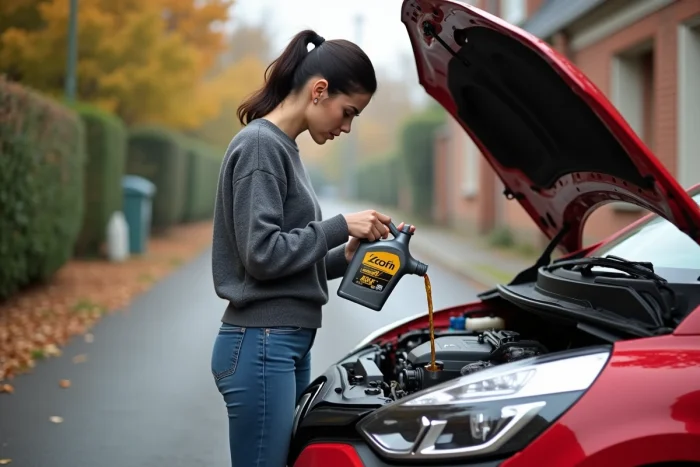
The 1.2 16V (D4F) petrol engine, which powers a large part of the Clio 3 Phase 2, has a documented tendency for oil overconsumption, generally starting at high mileages. This phenomenon is linked to two main factors: the gradual fouling of the piston rings and the aging of the valve stem seals.
| Parameter | 1.2 16V D4F Engine | Diesel Units (1.5 dCi) |
|---|---|---|
| Risk of oil overconsumption | Frequent beyond mid-life of the engine | Less documented on this item |
| Main identified cause | Fouled rings, valve stem seals | Problems more often related to injection or DPF |
| Recommended frequency of level check | Every 1,000 km, even between two oil changes | According to the maintenance booklet |
| Diagnostic attention points | Oil level, smoke on cold start | Injectors, EGR valve, particulate filter |
On a D4F, checking the oil level every 1,000 km is the most frequently mentioned recommendation from independent workshop feedback. Not waiting for the oil change to check this level is the reflex that prevents engine failure related to a lubrication deficit.
Warning Signs Not to Ignore
A slight bluish smoke on cold start, a visibly dropping oil level between top-ups, or a sudden increase in consumption: these three signals, taken separately, may seem benign. Combined, they indicate a segmentation problem that, if detected early, remains repairable at a reasonable cost.
Clio 3 Phase 2 Maintenance Plan: Adjusting Frequency to Engine Type and Actual Use
Following the Renault maintenance booklet is a foundation, not a ceiling. The revision rhythm should take into account the engine type (petrol or diesel), the type of journeys (short urban or road trips), and the actual annual mileage.
- On a 1.5 dCi diesel engine, repeated short trips without reaching operating temperature accelerate the fouling of the EGR valve and particulate filter. Occasional driving at sustained speeds on the road helps limit this phenomenon.
- On the 1.2 16V petrol engine, the oil change should ideally be performed at least once a year, even if the mileage threshold is not reached, to compensate for the degradation of the oil due to short urban trips.
- The replacement of the timing belt does not follow a unique schedule: the interval varies according to the engine type and usage conditions. Relying solely on mileage without considering the age of the belt exposes one to avoidable engine failure.
- Periodic electronic diagnostics allow for the detection of injection faults or engine error codes before they lead to immobilizing failures.
Spare Parts: Balancing Between OEM and Equivalent
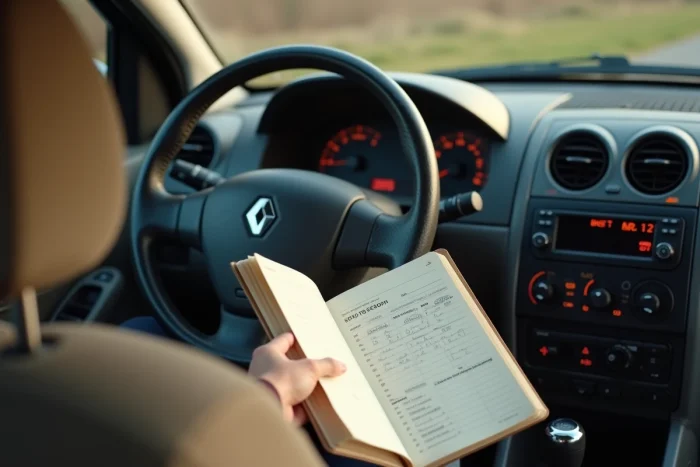
For a Clio 3 Phase 2, the market for equivalent parts is very developed. For filters (oil, air, cabin) and brake pads, equivalent quality references offer comparable performance to original parts at a lower price. However, for parts related to timing or diesel injection (injectors, high-pressure pump), favoring original parts reduces the risk of premature failure.
Fuel and Driving: Two Often Underestimated Levers on Renault Engine Longevity
The choice of fuel and driving style directly influence engine lifespan. On a 1.5 dCi diesel, poor-quality fuel accelerates injector fouling, which degrades atomization and increases consumption. On the 1.2 16V petrol, using fuel appropriate to the recommended octane rating limits deposits on the valves.
The driving itself plays a measurable role. Straining the engine when cold during the first kilometers, braking late and systematically, or driving in a constant low-rev range on a diesel are practices that accelerate mechanical wear without the driver perceiving an immediate signal.
The Clio 3 Phase 2 was designed to last well beyond its average resale mileage, provided the right maintenance points are targeted. The tailgate wiring, the oil level of the D4F, and the adherence to a maintenance plan suited to actual use form the three axes that separate a reliable vehicle from one that frequently visits the workshop.