How many Chanel fashion shows are held each year and why?
When closely following the fashion calendar, one notices that Chanel does not limit itself to the two annual fashion weeks. The house multiplies its appointments, each serving a specific logic, whether commercial, heritage, or artisanal. Understanding the number of Chanel fashion shows per year is primarily about grasping the purpose of each collection format.
Ready-to-wear, haute couture, Cruise, and Métiers d’art: what each Chanel show concretely produces
One could simply count the shows, but the real question lies elsewhere: each format fulfills a different function in the production and communication chain of the house. Here are the main events that structure a year at Chanel.
- Spring-summer and autumn-winter ready-to-wear: presented during the Paris fashion weeks, these two shows form the commercial foundation. They showcase the pieces that will arrive in stores in the following months and set the main stylistic lines for the season.
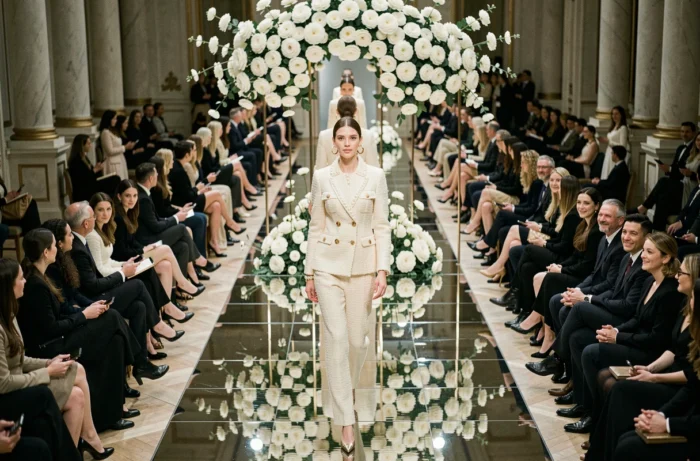
- Spring-summer and autumn-winter haute couture: two appointments reserved for bespoke creations, presented in Paris according to the calendar of the Federation of Haute Couture and Fashion. The target audience is limited, but the media visibility remains considerable.
- Cruise Collection: a traveling show organized outside the Paris calendar, often in a historically significant location. In 2026, Chanel chose Biarritz, the city where Gabrielle Chanel opened a couture house in 1915. This format directly links a current collection to the brand’s heritage.
- Artisan Crafts Collection: a show dedicated to the artisanal know-how of Chanel’s partner workshops (embroidery, featherwork, goldsmithing). It highlights techniques that other formats do not showcase in the same way.
Thus, there are at least six major shows per year, not counting any additional presentations. For information on Chanel shows on À la Française Toujours Chic, the details of each appointment are broken down season by season.
Why Chanel organizes traveling shows outside of Paris
The Cruise and Artisan Crafts collections stand out from the rest of the calendar by their location. While ready-to-wear and haute couture remain anchored in Paris (Grand Palais, Palais de Tokyo, or ephemeral venues), the traveling shows go on the move.
The choice of location is never merely decorative. Biarritz for the 2026 Cruise, Seoul for the 2026 Artisan Crafts: each destination connects the collection to a strategic market or a chapter in the house’s history. The location becomes both a narrative and commercial argument.
For a brand that does not engage in traditional advertising at the same pace as its competitors, these events generate massive media coverage. A Cruise show in Biarritz produces unique images, picked up by the international press for several weeks. The return in visibility far exceeds that of a classic campaign.
The Artisan Crafts case: a show that exists nowhere else
The Artisan Crafts format is unique to Chanel. No other major house dedicates an entire show to showcasing its partner workshops. The featherworkers, embroiderers, and jewelers who work for the house have their craftsmanship brought to the forefront.
This show also serves a recruitment and transmission purpose. Showing these trades on an international stage helps attract new artisans in fields where succession remains a constant challenge.
Chanel show calendar: commercial rhythm and collection logic
Fashion shows are often associated with a media spectacle, but their calendar primarily obeys production constraints. Each presentation triggers a chain: orders from buyers, manufacturing, delivery to stores.
The spring-summer ready-to-wear, presented in October, arrives in stores starting in February or March. The autumn-winter, shown in March, is available the following fall. The Cruise and Artisan Crafts collections intersperse between these two key moments and allow for a renewal of the store’s offerings at times when the main collections begin to wane.
Each show corresponds to a distinct sales window. By multiplying appointments, Chanel maintains an almost continuous flow of new products, which drives traffic in stores throughout the year.
A more sustained rhythm than most comparable houses
When compared to other luxury players, most houses limit themselves to four or five annual shows. Some, like Dior, have occasionally reached a higher pace, but Chanel is one of the few houses that regularly maintains six or more appointments each year.
This rhythm comes at a high production cost, both in creation and logistics. The exact number may vary slightly from year to year, depending on whether an additional presentation is added to the usual program or if an exceptional event enriches the calendar.
What the number of Chanel shows reveals about the house’s strategy
Multiplying shows is not a whim. For Chanel, each presented collection fulfills a role that others do not cover. Ready-to-wear drives current revenue. Haute couture maintains prestige and historical legitimacy. The Cruise opens geographical markets. The Artisan Crafts protect and enhance an artisanal ecosystem.
Six annual shows allow for the simultaneous coverage of these four functions. Reducing this number would force the house to sacrifice one of these axes, something it has never done since the establishment of this expanded calendar.
The Grand Palais in Paris remains the emblematic venue for the main collections, but the traveling destinations remind us that Chanel builds its image as much through travel as through its Parisian roots. This dual movement, between local tradition and international reach, explains better than any figure why the house maintains such a rhythm of presentations.