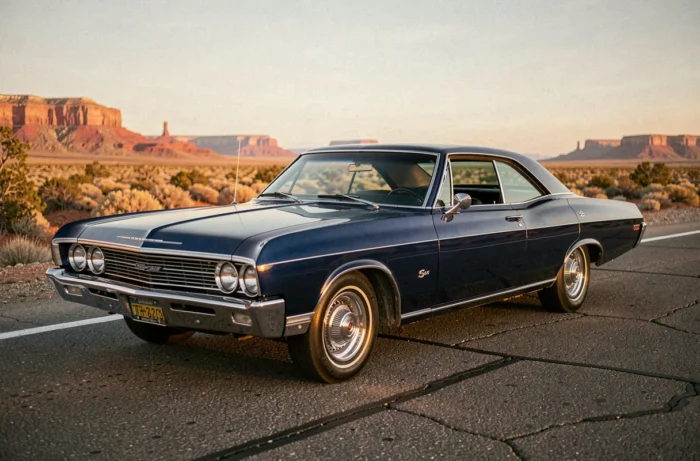
Why does the Chevrolet Impala continue to captivate car enthusiasts?
The Chevrolet Impala rolled off the production line on February 27, 2020, at the Detroit-Hamtramck plant. General Motors chose to focus its investments on SUVs, crossovers, and electric vehicles. Since that date, no new Impalas have left dealerships, and this disappearance fuels a phenomenon that the automotive market is watching closely: the passion for this model does not wane; it transforms.
End of Impala Production and Birth of a Heritage Object
When a manufacturer removes a car from its catalog that has been produced for over six decades, it creates a void that the used car market and the collector’s market rush to fill. The Impala is no exception to this mechanism.
The last generation, the one from 2020, remains a large sedan accessible on the second-hand market. According to Kelley Blue Book, resale values between private sellers are significantly below the original sticker price, keeping this car within an affordable range for daily use. Here we find what has made the historical promise of the model since the late 1950s: a generously sized vehicle, comfortable, designed for the masses.
As shown by Blog Automobile’s auto articles, it is precisely this dual status that makes the Impala unique in the landscape of disappeared American cars. It has never been reserved for an elite, and this accessibility extends its lifespan in the used car market far beyond that of other sedans abandoned by their manufacturers.
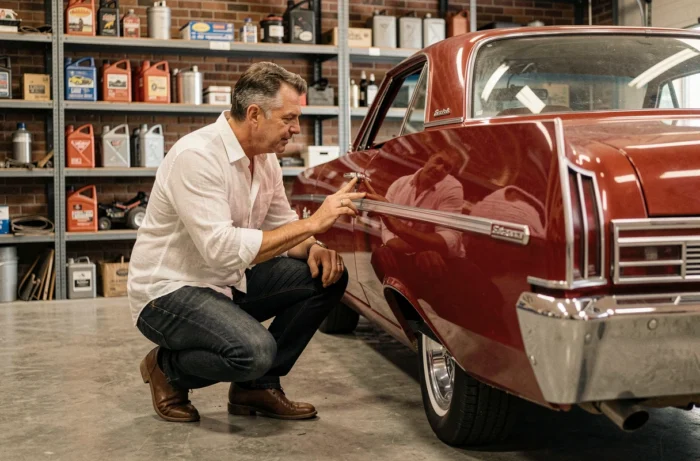
Restoration of Classic Impalas: An Active Parts Supply Chain
The passion for a collector vehicle relies as much on emotion as on the technical feasibility of its restoration. In this regard, the Impala retains a concrete advantage over other American models of the same era.
Specialized suppliers continue to produce body parts for the 1961 to 1966 generations: floors, rockers, trunk panels. This reproduction offering reduces one of the major obstacles to restoration, namely the scarcity of original components. However, compatibility varies according to the year and body type (coupe, four-door sedan, convertible), which necessitates precise verification before any purchase.
This availability is not trivial. For an enthusiast torn between an Impala and a Ford Galaxie from the same period, the density of the parts network can sway the decision. The historical production volume of the Impala, far exceeding that of most of its competitors, has created a supplier ecosystem large enough for restoration to remain a realistic project, not a pipe dream.
What the Reproduced Parts Supply Chain Covers
- Structural elements: complete floors, frame rails, radiator supports, allowing the rescue of heavily corroded bodies
- Exterior panels: fenders, rockers, trunk panels, reproduced in stamped steel to original dimensions
- Trim and finishing parts: emblems, chrome moldings, windshield seals, often available in varying quality depending on the supplier
Popular Culture and Chevrolet Impala: An Anchor Beyond Automobiles
The Impala occupies a place in the collective imagination that few American cars can claim. The series Supernatural, which aired for fifteen seasons, associated a black 1967 Impala with the very identity of the show. For an entire generation of viewers, this car is not just a prop; it is a character in its own right.
The cultural impact is also measured in the lowriding scene, an automotive tradition born in the Chicana communities of California. The Impala is the most represented model in this culture, particularly the 1958 to 1970 generations. Hydraulic suspensions, candy paint jobs, and tufted interiors transform the car into a mobile work of art, showcased at gatherings that attract thousands of visitors.
The interest of younger collectors in restomods confirms this dynamic. The transition from screen to garage creates a demand oriented towards restomods, meaning a vintage body paired with modern mechanics, as these buyers want the sensations without the maintenance constraints of a 1960s engine.
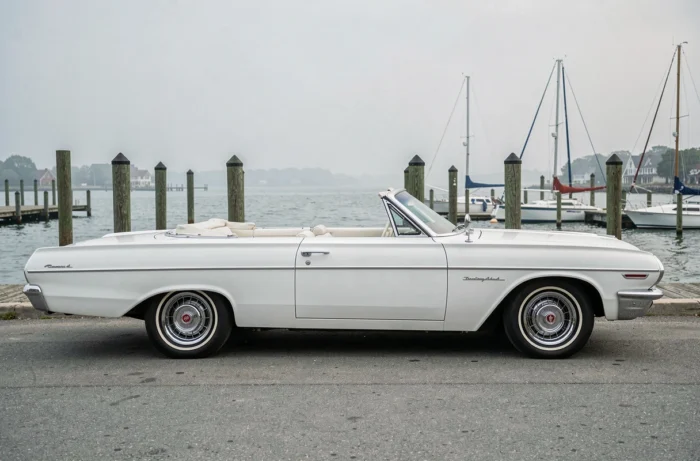
Collector Car Market and Impala Valuation: Recent Trends
The collector car market has experienced a rebalancing in recent years, with a decline in average prices observed at auctions. This trend, far from penalizing the Impala, could benefit buyers who were waiting for a more accessible entry point.
Field reports vary on this point. Some specialists observe that matching numbers Impalas are seeing their values rise, driven by the scarcity of unmodified examples. Others note that common models (four-door sedans, six-cylinder engines) remain in moderate price ranges, preserving access for the majority.
This market segmentation reflects the diversity of Impala production. Unlike a Corvette or a Camaro, which have a more homogeneous profile, the Impala covers a very broad spectrum:
- SS (Super Sport) versions with high-performance V8 engines, sought after by pure collectors
- Standard sedans and wagons, usable daily and often restored with a reasonable budget
- Restomods, which combine vintage bodies with contemporary mechanics, sometimes with electric conversions to meet European regulatory constraints
This variety partly explains why the Impala attracts such different profiles as a Texan collector, a lowrider enthusiast in Los Angeles, or a car design aficionado in France.
Chevrolet Impala and American Identity: What This Car Tells Us
From its launch in 1958, the Impala was positioned as a prestigious vehicle accessible to the average American citizen. This initial promise has never truly been contradicted over the ten generations produced between 1958 and 2020.
The Impala has traversed decades by adapting: compact in the 1970s under the pressure of oil crises, becoming imposing again in the 2000s, always positioned as a family sedan at a reasonable price. This pragmatism explains why it has been, several times, the best-selling car in the United States.
The end of its production has not erased this history. On the contrary, it has crystallized it. The Impala has become a temporal marker, a car that tells six decades of American automotive industry, strategic choices, and cultural shifts. It is this depth, both technical and emotional, that continues to fuel enthusiasts’ attachment long after the last example left Detroit-Hamtramck.